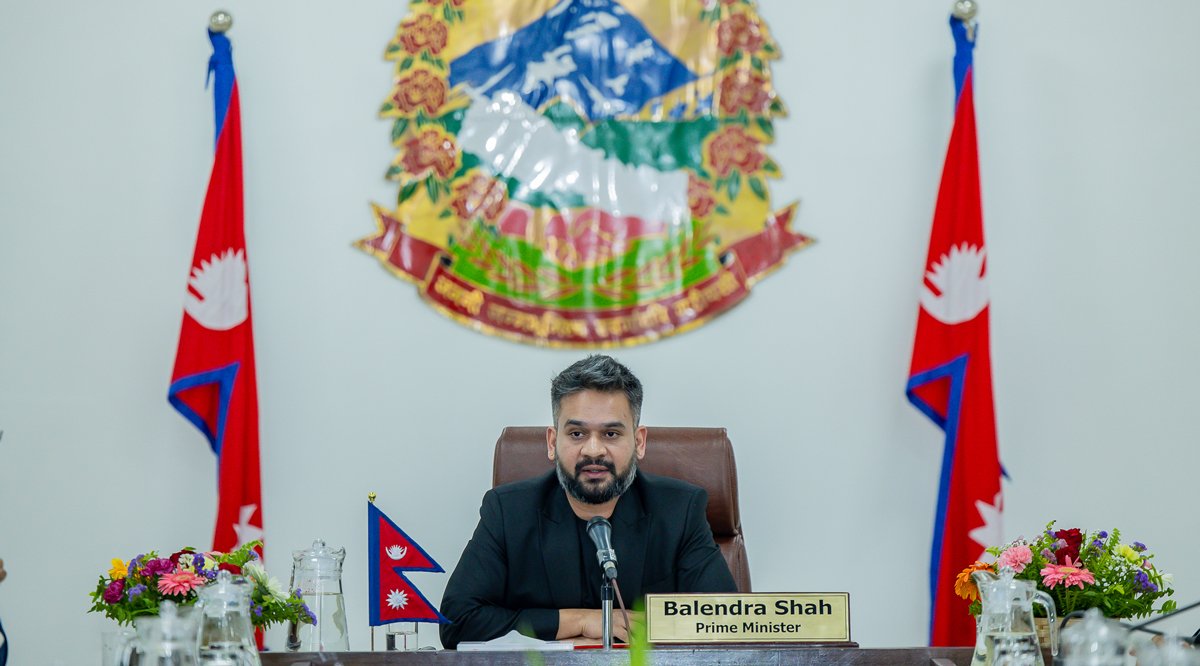
KATHMANDU — The Rastriya Swatantra Party (RSP) government, led by Prime Minister Balendra (Balen) Shah, has completed six months in office at Singha Durbar. While the administration generated significant initial optimism by unveiling a 100-point action plan in its very first Cabinet meeting, its half-year track record presents a mixed bag of administrative gains alongside serious policy, social, and governance challenges.
Noticeable Improvements in Public Service
Over the past six months, the government has delivered tangible efficiency improvements in routine public service delivery. Administrative processes have streamlined, significantly reducing the hassles citizens previously faced when acquiring passports and driving licenses. Enhanced responsiveness through the “Hello Sarkar” grievance platform and an assertive stance on anti-corruption have helped retain a degree of public trust in everyday governance.
Carrying forward initiatives from his tenure as Mayor of Kathmandu, Prime Minister Shah pressed for the enforcement of a 10 percent quota for free hospital beds for underprivileged citizens. Additionally, following widespread public pushback, the administration rolled back the proposed 3 percent tax on health and education—though consumers continue to bear the burden of Value Added Tax (VAT) on electricity.
Policy Delays and Structural Stagnation
Despite early promises, the government has fallen short on key policy commitments. Major legislative benchmarks, including the long-awaited School Education Act and the Civil Service Act, remain unpassed.
Efforts to streamline governance by downsizing ministries to 17 have been countered by criticism over an oversized team of advisors and secretarial staff. Observers note that running ministries primarily through the Prime Minister’s central secretariat—bypassing traditional bureaucratic channels—raises concerns regarding democratic accountability and institutional norms.
Furthermore, while the administration voided over 1,500 political appointments to break patronage networks, more than a thousand of those positions remain unfilled, slowing down administrative functioning. Critics also argue that under the banner of “meritocracy,” traditional judicial norms were disrupted in ways that appeared aimed at shielding party leadership from ongoing legal scrutiny.
Social Unrest, Disaster Response, and Unaddressed Grievances
The government’s handling of informal settlements along the Bagmati riverbank has drawn severe backlash. Forced evictions under the promise of relocation left many families stranded, triggering intense distress and tragic instances of self-immolation that activists claim the administration has largely ignored.
Despite securing a near two-thirds majority built on the momentum of last year’s August Gen-Z movement, the RSP-led government has yet to deliver comprehensive relief, compensation, or institutional honor to injured protesters and families of martyrs.
Similarly, relief and rehabilitation efforts following the August 26 (Bhadra 10) Bhote Koshi floods remain sluggish. Displaced families face difficult conditions in temporary holding centers, and clear frameworks for supporting affected children’s education and welfare are lacking. Concurrently, cooking gas shortages and rising inflation continue to strain household budgets.
Private Sector Friction and Diplomatic Maturity
The administration’s aggressive approach has faced criticism for leaning into political retribution. High-profile detentions of former top state officials—including a former Prime Minister, Home Minister, and Chief Justice—were conducted with a heavy-handed style that critics argue bypassed due process.
Similar high-handed tactics against prominent business leaders have left the private sector cautious. Despite high liquidity in commercial banks, private sector credit expansion remains slow, stunting economic momentum and failing to curb youth emigration rates.
On the international front, the Prime Minister’s diplomatic engagement has at times been viewed as inexperienced, while his interaction with Parliamentary oversight remains minimal.
The Road Ahead
Holding a decisive, near two-thirds parliamentary majority, the Shah administration operates free from the coalition pressures and compromises that constrained previous governments. Moving forward, rectifying early administrative missteps, upholding democratic principles, and ensuring transparent governance will be critical if the government is to translate its strong mandate into sustained national progress.